
Key Questions to Ask When Organizing Advertising Inquiries for Service Estimates
Learn which questions help local service businesses qualify advertising inquiries effectively before preparing service estimates. This guide explains practical steps to identify fit, timing, budget, and next actions, helping you organize leads and follow up efficiently.

When organizing advertising inquiries for service estimates, asking the right questions is crucial to qualify leads effectively and manage your time and resources wisely. This process helps you determine whether a project fits your services, if the timing works, and what information is missing before you prepare an estimate or schedule a visit. The goal is to move from a vague inquiry to a clear next step, whether that is booking an estimate, requesting more details, or politely declining a lead that falls outside your scope.
Start by confirming the basic facts: What service does the customer need? Where is the job located? What result do they expect? When do they want the work done? Are there any access or approval considerations? These questions help you quickly assess fit and urgency.
If any detail is missing but critical, ask for it directly rather than overwhelming the customer with a long form. For example, if a customer asks for wall repairs but you don’t know whether they want patching or repainting, a simple clarifying question can ensure your estimate visit is productive.
Use the answers to decide your next step. If the project fits your services and area and you have enough information, schedule the estimate. If one key piece is missing, request that specific detail before booking. If the job is outside your service area or expertise, decline politely and, if possible, suggest alternatives.
This approach avoids wasted trips and helps maintain a professional, respectful communication flow that builds trust. It also keeps your team focused on leads that are ready to move forward, improving efficiency and customer experience.
Understanding the Purpose of Qualification Questions
Qualification questions are designed to filter advertising inquiries so you can identify which leads are ready for an estimate and which need more information or should be declined. They are not meant to collect every detail upfront but to clarify if the project fits your services and if you have enough context to proceed.
By focusing on the essential facts early, you avoid scheduling visits that waste time or resources. Qualification helps you prioritize inquiries based on scope, location, timing, and budget context. It also sets clear expectations with customers about the next steps in the process.
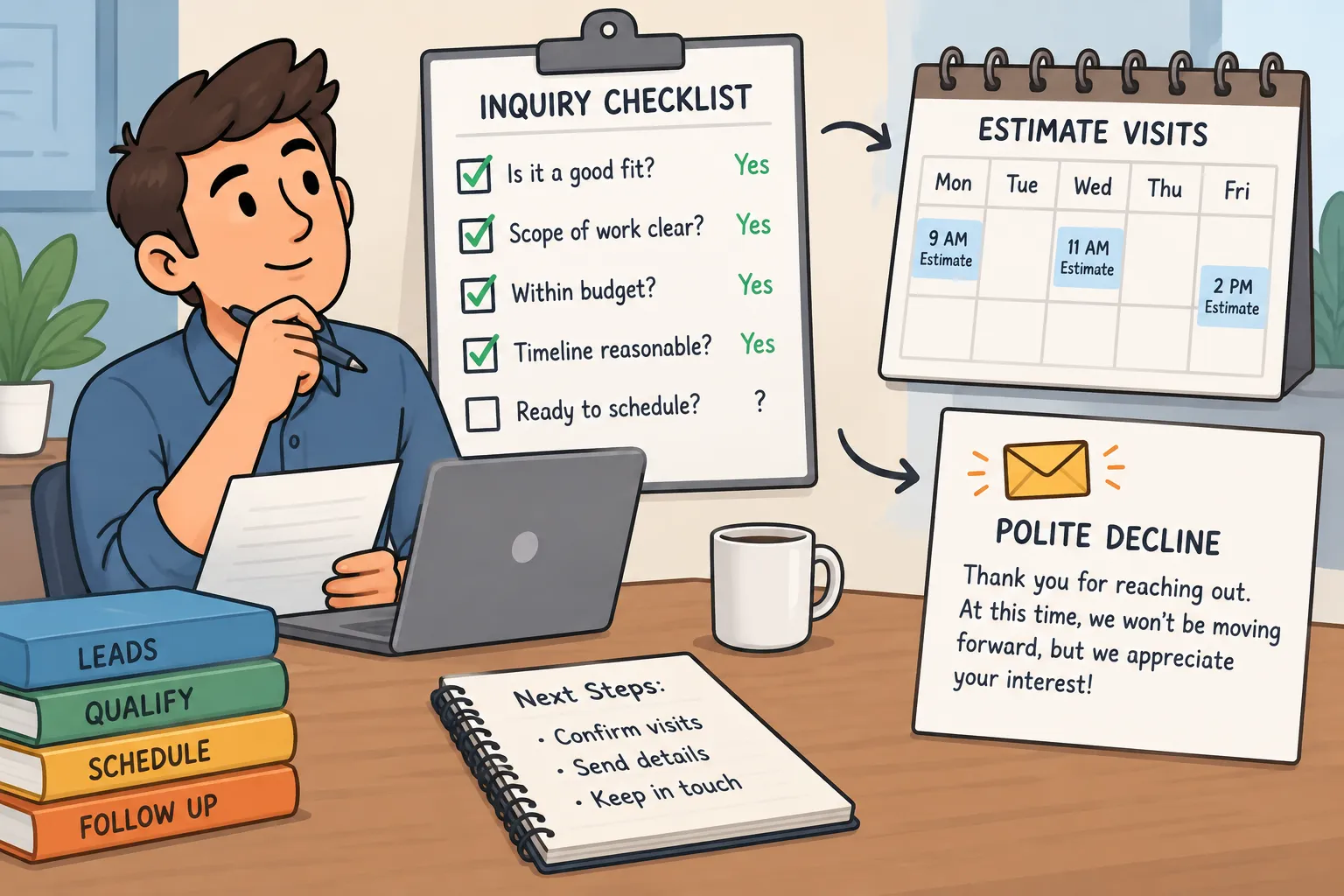
Key Questions to Ask When Organizing Inquiries
Start with these core questions to gather the minimum viable information needed for qualification:
1. What service or work do you need done? This clarifies the scope and ensures you offer the requested service.
2. Where is the job located? Confirm the address or ZIP code to verify it is within your service area.
3. What result are you looking for? Ask customers to describe what a successful outcome looks like to avoid misunderstandings.
4. When would you like the work completed? Understanding timing helps you assess availability and urgency.
5. Are there any access or approval requirements? Knowing if a property manager, tenant, or homeowner must be present avoids scheduling conflicts.
Handling Missing or Unclear Information
If an inquiry lacks one important detail, ask a focused follow-up question rather than a long form. For example, if a customer requests a free estimate for wall repairs but you don’t know if they want patching only or full repainting, ask: “Would you like the damaged areas patched only, or should we prepare and repaint the walls as well?”
This simple clarification can turn a vague inquiry into a clear scope, making your estimate visit more efficient and accurate. Avoid making assumptions based on incomplete information or personal impressions.
Deciding the Next Step After Qualification
Based on the answers, choose one of these next steps:
• Book the estimate visit if the project fits your services, location, and timing, and you have enough detail.
• Request one missing item if a useful answer, photo, or measurement would prepare the inquiry for scheduling.
• Decline the job politely if it falls outside your service area or expertise, and offer alternative directions if possible.
This decision-making process helps you manage leads consistently and efficiently without overcommitting or wasting resources.
Common questions
What are the most important questions to qualify a lead before preparing an estimate?
The most important questions focus on the service needed, job location, expected result, timing, and any access or approval requirements. These help you determine if the project fits your offerings and if you have enough information to proceed with an estimate or need to ask for more details.
How should I handle an inquiry with incomplete information?
Ask a targeted follow-up question about the missing detail that will help clarify the scope or timing. Avoid overwhelming the customer with long forms. If the missing information is critical, request it before scheduling an estimate. If the inquiry lacks fit, decline politely.
 Contact us on WhatsApp ↗