
SEO for Service Businesses: When to Create a Separate Page for Each Service
A practical way to decide whether each service deserves its own SEO page: compare what customers are looking for, what they need to know, and whether your current pages answer those needs distinctly.
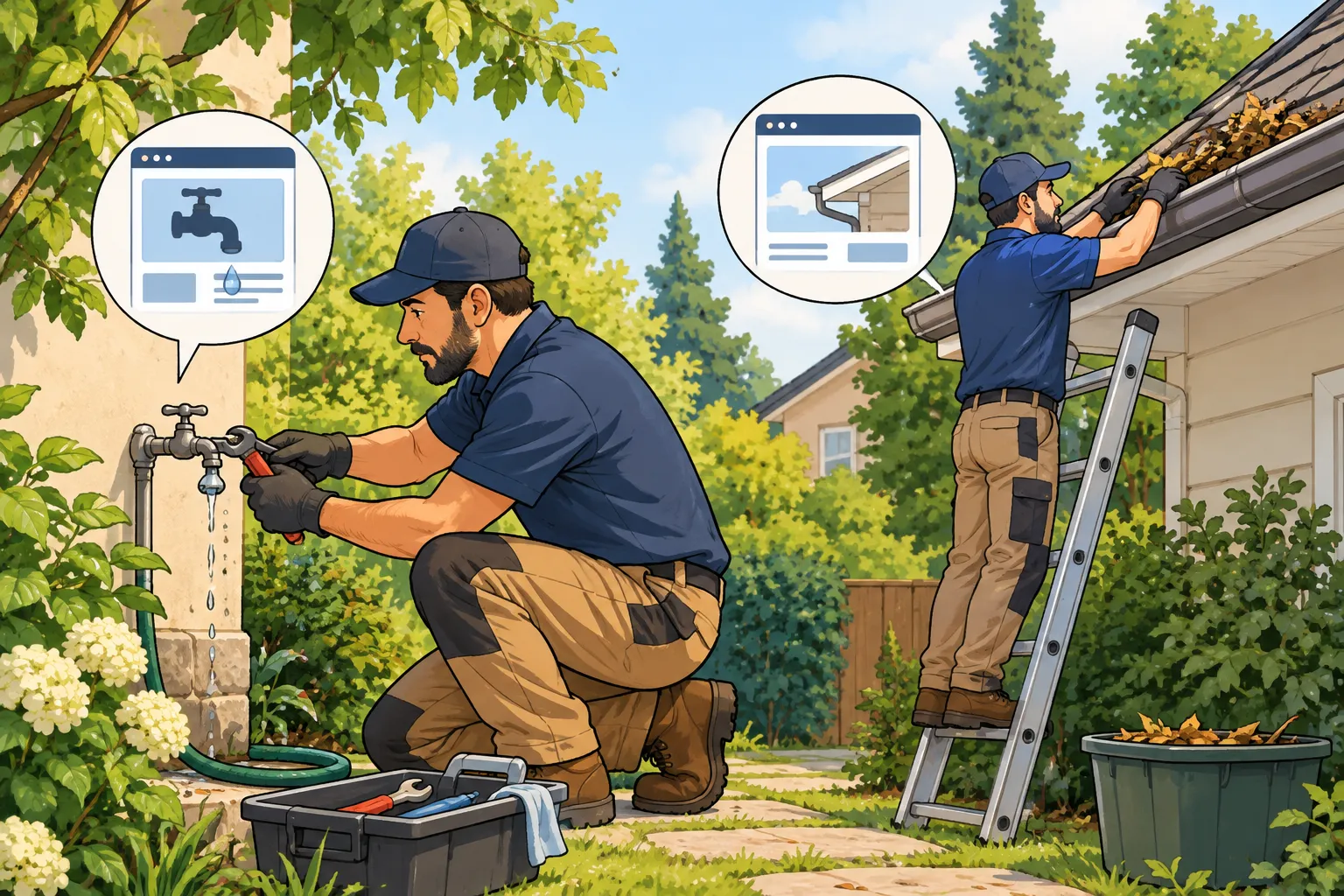
Create a separate page when a service has a distinct customer need and requires meaningfully different information, such as its process, scope, audience, or service area. Keep related offerings together when customers need essentially the same explanation and the differences can be made clear on one useful page. The goal is not to create a page for every keyword; it is to help a visitor understand the right service and what to do next.
Start with the customer’s reason for searching
List the services you actually provide, then describe the customer’s likely need for each one in plain language. Ask what prompted the search, what the person wants done, and what details would help them decide whether to contact you. If two services answer different needs, a shared page may force visitors to sort through information that does not apply to them. Separate pages can make those distinctions easier to see.
Next, compare the information a customer needs before requesting each service. A cleaning company, for example, might offer recurring home cleaning and move-out cleaning. The first may need an explanation of ongoing visits and how a customer describes the home; the second may need a clear account of the specific move-out scope and how to request an estimate. This is an illustrative example, not a claim about a particular business. If the useful details differ substantially, separate pages may serve readers better.
- Different customer problem or desired outcome
- Different process, scope, or preparation details
- Different audience or service-area explanation
- Different questions a visitor needs answered before contacting you
A distinct page is most useful when it explains a distinct service need.
Use this comparison before splitting pages
A simple comparison can reveal whether a separate page would add useful information or merely repeat what is already on your site. Focus on the visitor’s decision, not on how many search phrases you can attach to a service. Similar wording alone does not prove that two offerings need separate pages; different customer intent and genuinely different explanations are stronger reasons to consider a split.
Review the current page alongside the proposed page outline. If the new outline needs its own accurate description, process, scope, and next step, it may deserve a dedicated page. If most sections would be copied with only a service name changed, improve the existing page instead. A page should stand on its own for a person who arrives directly from search, without relying on another page to explain what the offer means.
| Keep together | Consider separate pages |
|---|---|
| The services solve nearly the same customer need. | The services address different problems or outcomes. |
| The process and useful details are substantially alike. | The scope, process, or customer questions differ. |
| A shared explanation can clearly distinguish the options. | A shared page would make visitors work to find relevant details. |
| A new page would mostly repeat existing copy. | A new page can provide specific, accurate information. |
If the new page would mostly duplicate an existing one, strengthen the existing page first.

Make each page useful, not just different
A separate URL is not valuable by itself. Give each page a clear heading, a direct description of the service, the details that distinguish it, and a relevant next step. Explain what the service includes only when you can describe it accurately. If availability, coverage, or the exact scope depends on the customer’s situation, say so and explain how to ask. Do not fill gaps with assumptions or broad claims that could mislead a visitor.
Use language customers can understand rather than repeating variations of a search phrase. A page can answer practical questions such as who the service is for, what information helps when requesting an estimate, and how it differs from a related offering. Include local context only where it reflects the business’s actual coverage and helps the reader. Avoid publishing near-identical pages for many locations or service labels when they do not offer distinct, useful information.
- Can a visitor tell which service this page describes?
- Does it answer questions specific to this service?
- Are the scope and coverage statements accurate?
- Does it offer a clear, relevant next step?
- Would the page still help someone who did not arrive through a search engine?
Write for the person choosing a service; use search terms naturally within that explanation.
Plan the structure and review it over time
Before creating pages, map each service to the page that explains it. Note which offerings share a page, which may need their own explanation, and where visitors can move between related services. Use descriptive page titles and links that tell people what they will find. Keep the structure understandable: a visitor should be able to reach the relevant service page from an appropriate part of the site, not only from a search result.
After publishing or revising a page, review what people see and how the page is being discovered. Search activity and contact actions can provide context, but they do not by themselves explain why a page performs as it does. Consider whether the page answers the intended need, whether its information remains accurate, and whether visitors can take the next step. Search visibility, indexing, inquiries, and sales can vary; a page change does not establish a particular outcome.
- Inventory current services and existing pages.
- Write one sentence describing the customer need each service addresses.
- Compare the information and questions each service requires.
- Choose a shared page or separate pages based on meaningful differences.
- Draft distinct, accurate content and connect related pages clearly.
- Review the pages and relevant activity, then update when the offer or customer questions change.
Treat page structure as a useful explanation of your services, not a promise of search results.
Common questions
Should every service keyword have its own page?
No. A keyword variation alone is not a strong reason to create another page. First ask whether the search reflects a distinct customer need and whether you can provide meaningfully different, accurate information. If the page would repeat the same explanation with a few words changed, keep the content together and make the distinctions clear. This avoids creating pages that offer little additional help.
What if two services overlap?
Explain the relationship plainly. If customers benefit from comparing the options, a shared page with clear sections may be easier to use. If each service has a different scope, process, or set of questions, separate pages can explain those differences, with links between them. When the distinction is unclear, first confirm how the business actually describes and delivers each service; do not invent a difference just to create another page.
 Contact us on WhatsApp ↗