
SEO for Service Businesses: What to Include in a Local Service Area Page
A practical checklist for writing a local service area page that clearly explains where your business works, what it offers in each area, and how a potential customer can take the next step. Includes guidance on choosing locations, adding useful local context, avoiding thin or misleading pages, and reviewing the page before publication.
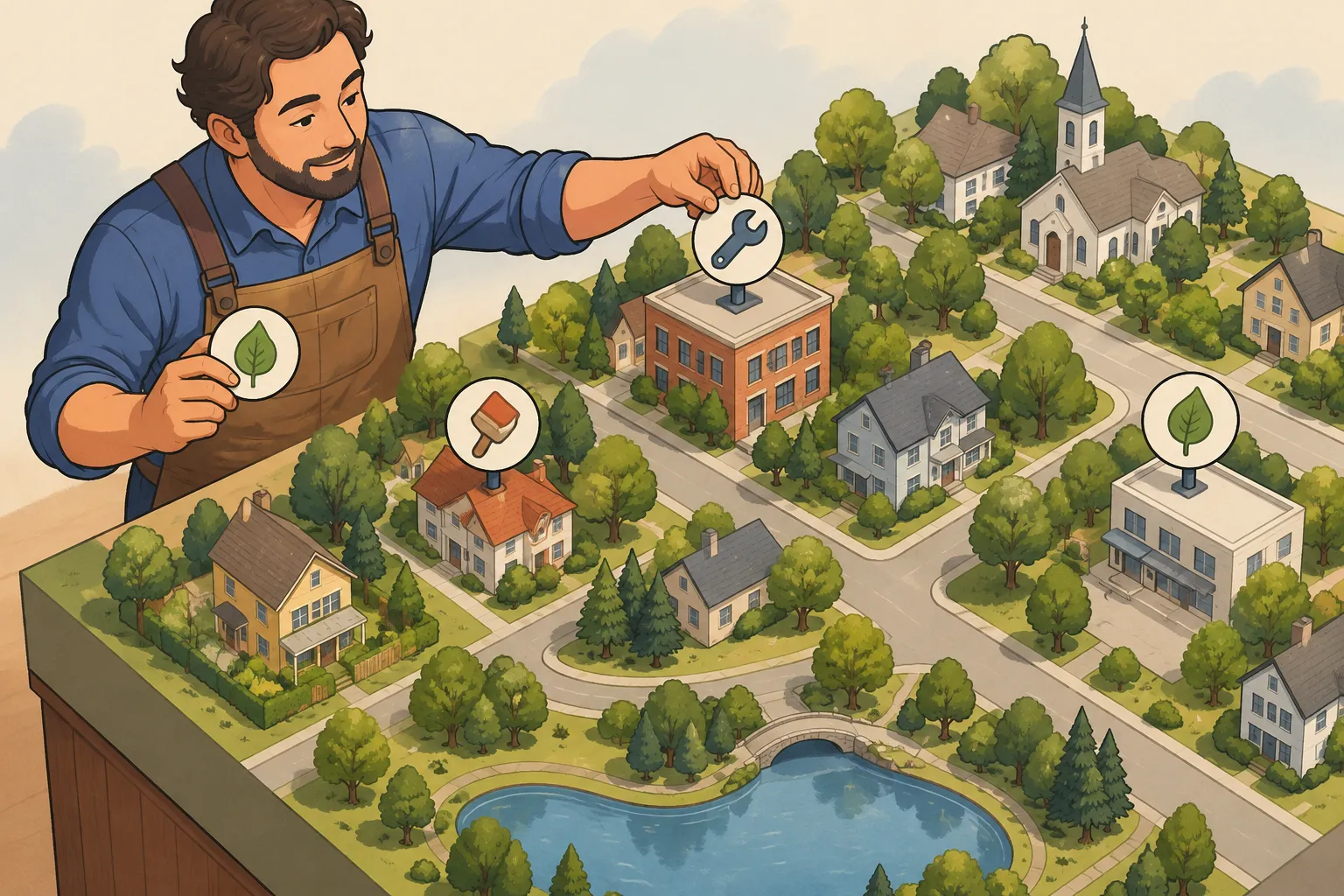
A useful local service area page tells visitors three things quickly: what service you provide, which places you actually serve, and how to ask about service in their location. Start with accurate coverage, then add details that help someone decide whether to contact you. Avoid publishing near-identical pages that only swap city names; a page should offer meaningful information for its intended readers. Use the checklist below to prepare a clear draft and identify what needs confirming before publication.
1. Confirm the service area before writing
Begin with the places your business currently serves, not every nearby city that might attract a search. Coverage can depend on the type of job, travel distance, scheduling, or other practical limits. If service varies by location, say so plainly and invite the visitor to confirm their address or ZIP code. A concise, accurate boundary is more useful than a broad claim that creates the wrong expectation.
Decide whether the page should cover one town, a group of nearby communities, or a wider region. The choice should reflect how customers describe their location and how your team handles requests. If you already have a page for a specific service, make sure the area page adds local information rather than repeating the service description. For help deciding whether to separate service topics, see when each service needs its own SEO page.
- List locations where you currently accept inquiries.
- Note any boundaries, exceptions, or service differences that a visitor should know.
- Choose a page scope that can be explained with useful, specific information.
2. Add local details that help a real visitor
A place name by itself is not local context. Explain what the service area means for a customer: whether you serve the whole community or selected neighborhoods, what kinds of requests you handle there, and what information helps you confirm availability. Include only details you can support. If the service is the same across the area, say that rather than inventing neighborhood-specific differences.
Use familiar place names naturally in the heading and body where they make the page easier to understand. A short list or map may help visitors orient themselves, but it should match your actual coverage and remain readable on a phone. Do not add a street address or suggest a local office unless the business genuinely has one there. A service-area page can describe remote or mobile coverage without implying a storefront.
- Name the city, region, or communities covered in ordinary language.
- Explain whether coverage is complete or limited to particular parts of the area.
- Describe relevant service availability only when it is accurate and current.
- Make it easy to ask whether a specific location is included.
3. Explain the offer and the next step
For example, imagine a landscaping business that serves selected communities around a metro area. Its page could name those communities, explain that availability depends on the property location and requested work, describe the landscaping services offered, and invite the visitor to send a ZIP code and project summary. This is an illustrative example, not a claim about a particular business or project. The important point is that the details answer practical questions instead of repeating a city name.

4. Review the page for usefulness and accuracy
Before publishing, read the page as someone unfamiliar with your business. Can they tell what you do, whether their location may be covered, and how to get an answer? Check that the page title and main heading describe the page accurately. Use internal links to relevant service information or contact options, and make sure the text remains easy to scan on a small screen. A page that is clear to people is a stronger starting point than one written mainly to repeat search phrases.
Compare the draft with your other location pages. If the only difference is the place name, consider whether one broader page would serve visitors better, or add genuinely useful distinctions where they exist. Keep coverage and service descriptions current when your operating area changes. Search visibility depends on many factors, and publishing a page does not determine whether or where it appears in search results. Results vary with the site, competition, content, and other circumstances.
- Check each location and service statement with the person responsible for accepting inquiries.
- Remove unsupported claims, invented local details, and repeated text that adds no value.
- Test the contact route and review the page on a phone.
- Agree on what to monitor, such as relevant search activity and contact actions, without treating rankings as a promise.
Publish a location page when you can make it genuinely useful: accurate coverage, a clear service description, relevant local context, and a straightforward way to ask about availability.
Common questions
Should I create a separate page for every city I serve?
Not automatically. A separate page makes sense when it can answer location-specific questions or explain a meaningful difference in coverage or service. If several pages would only replace one city name with another, a broader page may be clearer. Review the actual information you can provide for each place before deciding.
What should I prepare before requesting an SEO review?
Gather your current service list, the locations where you accept inquiries, existing service and location page URLs, and any known coverage limits. Note which statements need confirmation and what visitors should do to contact you. CM La Plata’s SEO work has an agreed scope; the team can discuss your website and next steps through its SEO service information.
 Contact us on WhatsApp ↗